
What Winter Reveals About Michigan Hunting & Recreational Land
When most people think about buying recreational or hunting land in Michigan, they picture lush green fields, summer trails, and food plots in full growth. While those months show land at its prettiest, winter is often the best time to truly evaluate a property—especially for serious buyers focused on long-term value, access, and wildlife potential.
Snow, cold temperatures, and leaf-off conditions remove visual noise and expose how a property actually functions. If you know what to look for, winter can tell you more about a piece of land than any other season.


Winter Reveals the True Lay of the Land
One of the biggest advantages of winter land inspections is visibility. Without leaves, tall grasses, and crops hiding the ground, it’s much easier to understand the property’s structure.
What winter shows clearly:
-
Topography: Ridges, draws, benches, and subtle elevation changes stand out once vegetation is gone.
-
Natural travel routes: Trails used by both wildlife and people become obvious.
-
Low spots and drainage patterns: Snow melt highlights where water naturally flows and collects.
-
Old roads and access points: Trails that look fine in summer may be nearly invisible once snow exposes ruts, slopes, and problem areas.
For recreational and hunting properties, understanding terrain is critical. The way deer move, bed, and travel is closely tied to elevation, cover, and wind—all of which are easier to visualize in winter.
Snow Tells You How Wildlife Actually Uses the Property
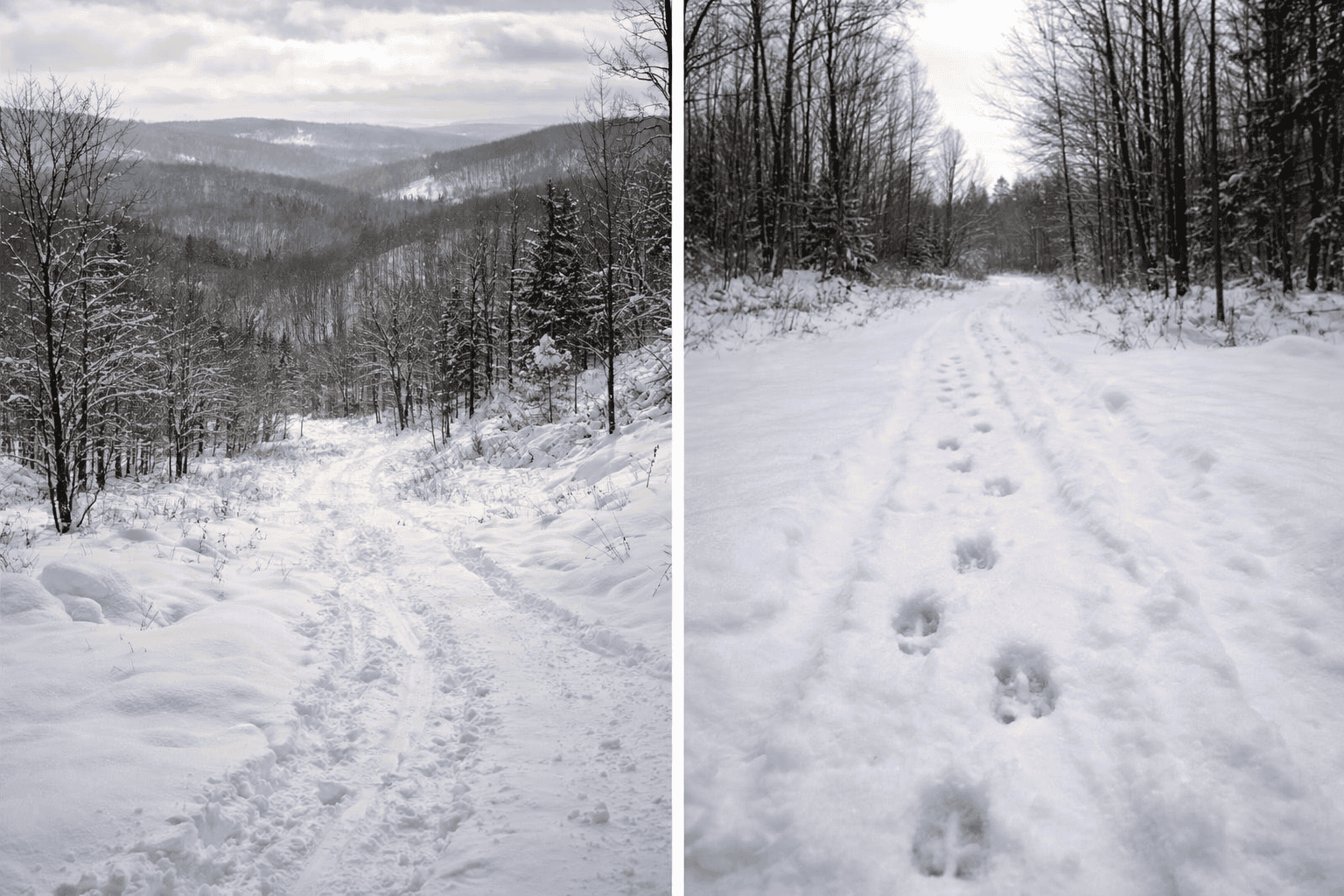
Fresh snow is one of the most valuable scouting tools available to Michigan land buyers and owners. It shows real movement, not guesses.
What snow tracking can reveal:
-
Primary travel corridors between bedding and feeding areas
-
Bedding locations, often on south-facing slopes, points, or thick cover
-
Crossing points near creeks, wetlands, and fence lines
-
Pressure from neighboring properties, including where deer are entering or leaving
Unlike trail cameras or summer scouting, snow doesn’t lie. It shows exactly how deer, turkeys, and other wildlife are using the land right now. This information is extremely useful when planning food plots, stand locations, access routes, or future habitat improvements.
Access Roads Get a Real Stress Test in Winter
Access is one of the most overlooked factors when evaluating recreational land, and winter is the best time to test it.
A driveway or trail that looks fine in July may tell a very different story in February.
Winter access checks include:
-
Can you reach the property after snowfall?
-
Do hills become slick or unsafe?
-
Are culverts functioning, or is water backing up?
-
Are there low spots that turn into mud during thaw cycles?
For landowners who plan to hunt, manage timber, or use the property year-round, reliable access directly affects usability and long-term value. Winter conditions quickly expose weaknesses that might otherwise be missed.
Easements and Boundaries Are Easier to Identify
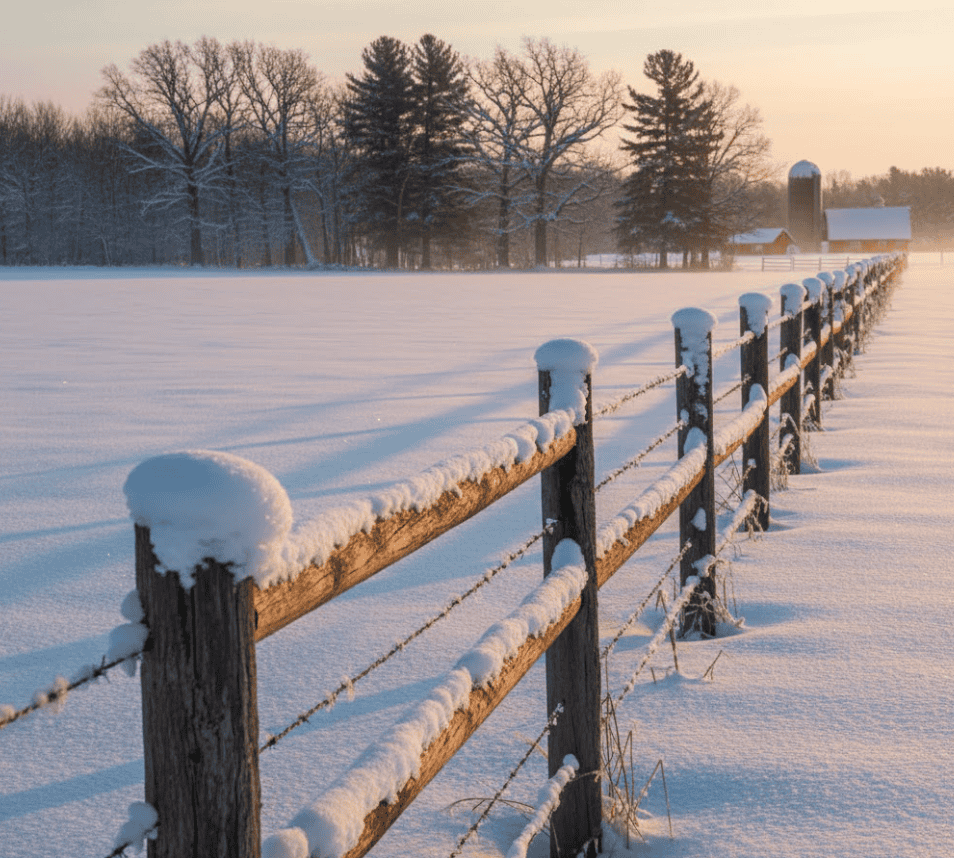
Leaf-off conditions also make it easier to identify:
-
Fence lines
-
Old boundary markers
-
Encroachments
-
Neighboring access points
In winter, you can often see where neighboring properties interact with yours—shared trails, crossing points, or areas of heavy use. These observations are important when evaluating privacy, hunting pressure, and future land management decisions.
Winter Helps Buyers Make Better, Less Emotional Decisions
From a market standpoint, winter often favors prepared buyers.
Why winter works:
-
Fewer buyers are actively shopping
-
Sellers tend to be more realistic
-
Inspections are more honest
-
Issues are harder to hide
Winter forces buyers to focus on function rather than appearance, which often leads to better decisions and fewer surprises after closing. Properties evaluated thoroughly in winter rarely disappoint once spring arrives.
Why February Is an Ideal Planning Month
February is a natural transition point. Landowners and buyers are:
-
Reflecting on the past hunting season
-
Planning spring projects
-
Preparing for food plots, habitat work, or improvements
Evaluating land now allows time to:
-
Plan access improvements
-
Schedule timber work
-
Design food plots
-
Address drainage issues
-
Prepare for listing or purchase before spring demand increases
Final Thoughts
While winter may not show Michigan land at its prettiest, it often shows it at its most honest. For recreational land, hunting properties, farms, country estates, and waterfront parcels, winter evaluation provides insight that other seasons simply can’t.
Serious buyers and landowners understand that February isn’t downtime—it’s a planning window. The work done now sets the foundation for smarter land use, stronger investments, and better long-term outcomes.